
River Extraction — Middle Tennessee
Dead Deer Removal From River
Large Waterway Extraction — Permitted, Insured, Same-Day
Rivers present the most demanding dead deer removal scenario in Middle Tennessee. Strong current, deep water, steep banks, and large carcass drift distances require specialized equipment and techniques. We handle river extractions across the Cumberland, Harpeth, Duck, Stones, and all major Middle Tennessee waterways.
(615) 613-5992 — Call Now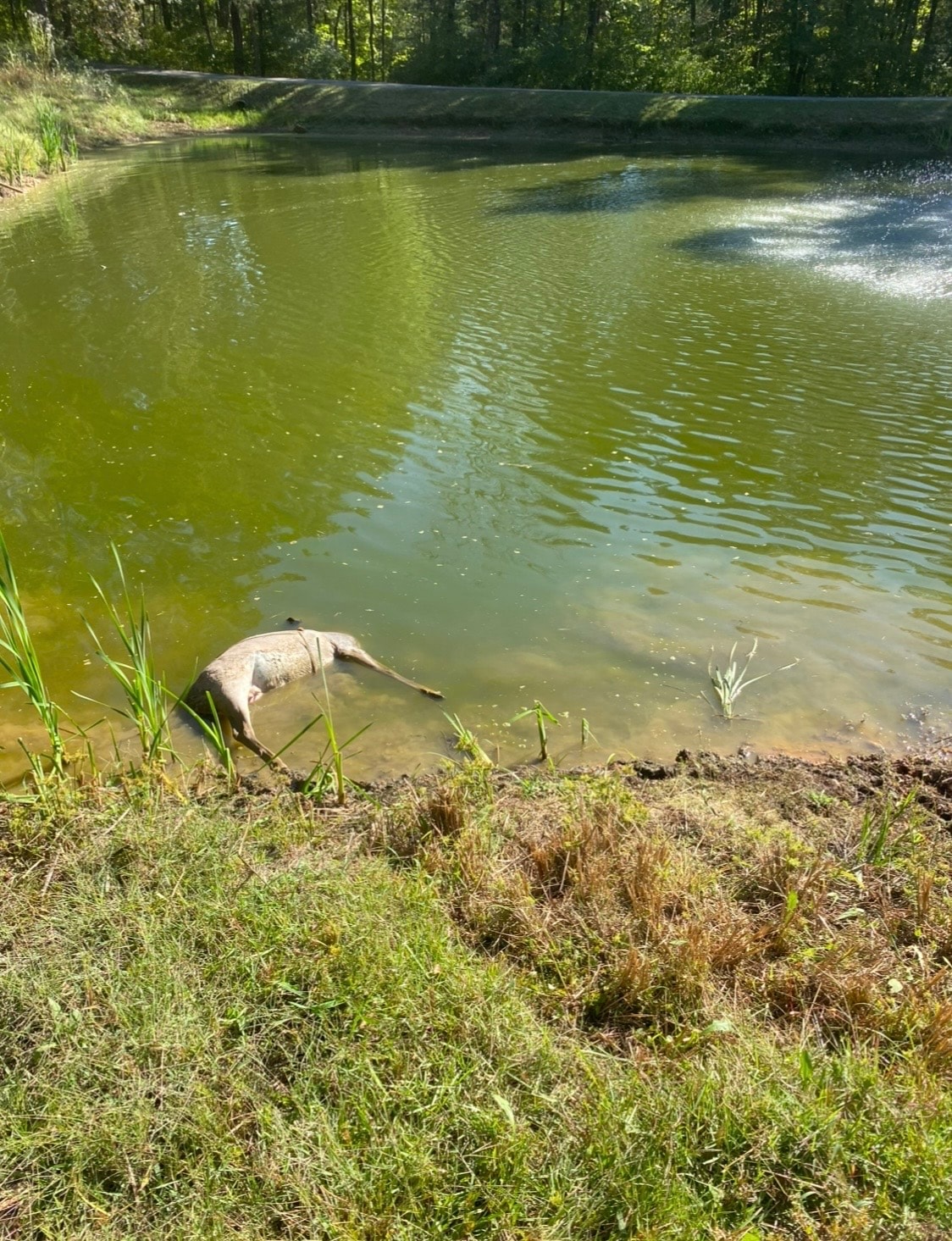
Why River Removal Is More Complex Than Creek Removal
Current moves the carcass fast
River current can move a deer carcass hundreds of yards in hours. A carcass that entered the water at one point may be lodged against a bank, bridge piling, or debris jam far downstream by the time you call.
Deeper water requires different equipment
Wading is not safe or practical in most river sections. Extraction from deeper river channels requires boat access, rigging, or bank-based retrieval equipment depending on conditions.
Larger contamination footprint
A carcass in a river contaminates a much larger stretch of water than a creek carcass. Downstream impact can extend miles, affecting fishing areas, livestock water access, and public recreation areas.
Bridge and structure entanglement
River carcasses frequently lodge against bridge pilings, culvert openings, low-water crossings, and debris jams. Extraction from structures requires specialized rigging and may involve coordination with road or bridge authorities.
Public waterway regulations are stricter
Major rivers in Tennessee are navigable public waterways regulated by TDEC, TWRA, and in some cases the Army Corps of Engineers. Carcass removal and disposal must comply with all applicable state and federal regulations.
Bank access is often limited
River banks are frequently steep, heavily vegetated, or privately owned by multiple parties. Identifying legal access points and safe extraction positions requires local knowledge and experience.
Rivers We Service in Middle Tennessee
Cumberland River
The primary river through Nashville and Davidson County. We handle extractions along the Cumberland from Cheatham County through Wilson County, including urban Nashville reaches.
Harpeth River
Flowing through Williamson and Cheatham counties, the Harpeth is a popular recreation river. Carcasses here affect fishing, kayaking, and downstream communities.
Stones River
Running through Rutherford and Davidson counties into Percy Priest Lake. We service the Stones River corridor from Murfreesboro to its confluence with the Cumberland.
Duck River
One of Tennessee's most biodiverse rivers, flowing through Maury County. Carcass contamination in the Duck River is especially sensitive given its ecological significance.
Red River
Flowing through Robertson and Montgomery counties in northern Middle Tennessee. We cover the Red River corridor for rural and agricultural property owners.
Other waterways
We service all rivers, large creeks, and navigable waterways across Middle Tennessee's six-county service area. Call us for any waterway situation — we'll assess and respond.
Our River Extraction Process
Location and drift assessment
We assess where the carcass entered the water, current conditions, and likely drift path. If the carcass has moved, we locate it before dispatching equipment. GPS coordinates help — share them if you have them.
Access and equipment selection
Based on water depth, current, and bank conditions, we select the appropriate extraction approach — bank-based retrieval, wading equipment, or boat access for deeper channels.
Containment and extraction
Containment barriers are deployed where conditions allow. The carcass is extracted using rigging, containment bags, and appropriate equipment for the water conditions. We work to keep the carcass intact to prevent fragmentation.
Bank cleanup
After extraction, we remove carcass debris from the bank and treat contaminated soil with enzyme-based deodorizer. Fluid-contaminated bank areas are documented and treated.
Regulatory-compliant disposal
Carcasses are disposed of in full compliance with TWRA regulations and TDEC water quality guidelines. We carry all required permits and maintain full liability insurance.
Carcasses Lodged Against Structures
River carcasses frequently drift into bridge pilings, culvert openings, low-water crossings, and debris jams. These situations require additional rigging and may involve coordination with TDOT or county road departments if the structure is publicly owned. We have experience with structure-entangled extractions and handle the coordination on your behalf.
Regulations for River Carcass Removal
TDEC water quality standards
Tennessee Department of Environment and Conservation regulates all state waterways. A decomposing carcass in a river is a reportable water quality event in some circumstances. We handle removal in full compliance.
TWRA carcass disposal
Tennessee Wildlife Resources Agency regulations govern legal disposal of deer carcasses statewide. We are TWRA-permitted for all carcass removal and disposal operations.
Army Corps of Engineers jurisdiction
Navigable rivers and their banks may fall under Army Corps of Engineers jurisdiction for certain activities. We are familiar with applicable federal requirements for river work in Middle Tennessee.
Property owner liability
If a carcass on your riverfront property contaminates downstream water or affects neighboring properties, you may bear legal liability. Prompt removal is the most effective way to limit exposure.
Common Questions
The deer is in the river but I don't know whose property the bank is on. Can you still help?
Yes. We can assess the situation and identify the appropriate access point and responsible party. For carcasses on public riverbanks or in the main channel of a navigable river, we can also advise on whether a government agency should be notified alongside private removal.
The deer has drifted downstream from where it entered. How do you find it?
We use current speed, entry point, and time elapsed to estimate drift distance. For large rivers, we may need to scout downstream from the entry point. GPS coordinates of the last known location are extremely helpful — share them when you call.
Can a deer in the river affect downstream fishing or livestock water?
Yes. A decomposing carcass in a river releases bacteria and pathogens that travel downstream. Fishing areas, livestock water access points, and downstream intake structures can all be affected. This is why river removals are treated as urgent.
Is river removal more expensive than land or creek removal?
River extractions typically require more equipment and time than land or small creek removals, so cost is generally higher. We provide an honest assessment and quote when you call. The cost of not removing a river carcass — in contamination, liability, and odor — almost always exceeds the removal cost.
What if the deer is lodged against a bridge or culvert on a public road?
If the structure is publicly owned, TDOT or the county highway department has jurisdiction over the structure itself. We can handle the carcass extraction and coordinate with the relevant authority regarding the structure. Call us first — we'll help sort out the jurisdictional question.
Deer in the River? Don't Wait.
Current moves carcasses fast. Same-day service across Middle Tennessee — TWRA-permitted, fully insured.
(615) 613-5992 — Call Now