
Waterway Extraction — Middle Tennessee
Dead Deer Removal From Creek
Water-Adjacent Extraction With Full Contamination Containment
A dead deer in or near a creek is an urgent situation. Decomposing carcasses in waterways contaminate downstream water, attract scavengers, and create health hazards that spread beyond your property line. We extract deer from creeks, streams, and drainage channels across Middle Tennessee — safely and legally.
(615) 613-5992 — Call Now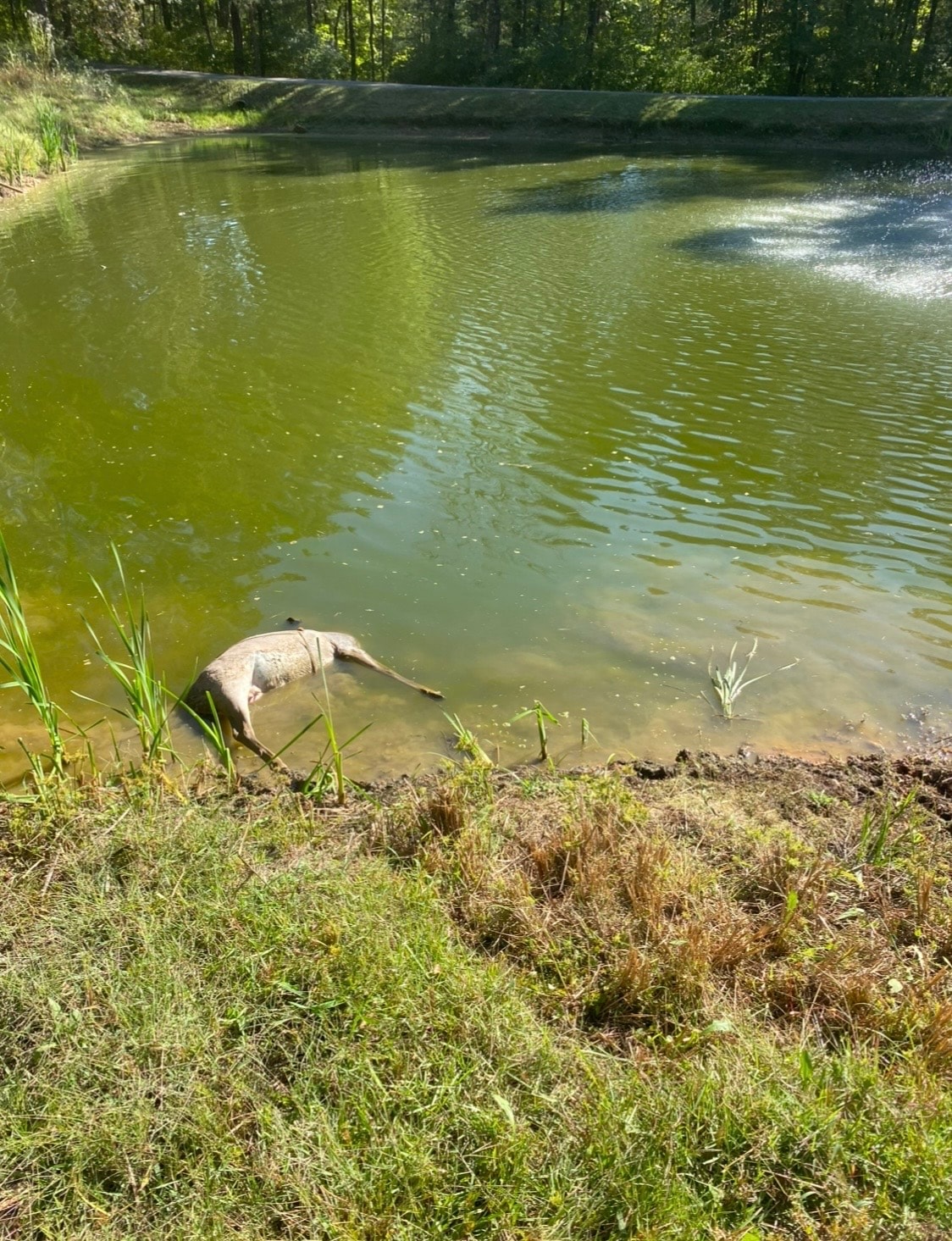
Why Creek Removal Is Time-Critical
Water contamination spreads downstream
Decomposition fluids, bacteria, and pathogens from a carcass in a creek flow downstream continuously. Neighboring properties, livestock water sources, and public waterways can all be affected.
Tennessee water quality regulations apply
Allowing a carcass to decompose in a waterway may violate Tennessee Department of Environment and Conservation (TDEC) water quality standards. Property owners can be held responsible for downstream contamination.
Scavengers congregate at water sources
Creeks and streams draw scavengers from a wide area. A carcass in a waterway attracts coyotes, vultures, and raccoons in higher numbers than a land-based carcass, spreading contamination further.
Flooding moves the carcass
Even a modest rain event can move a carcass downstream onto neighboring property or into a culvert or drainage structure. Removal before the next rain prevents a contained problem from becoming a larger one.
Odor travels along the waterway
Decomposition odor follows the water and wind corridor of a creek, affecting a much larger area than a land-based carcass of the same size. Nearby homes and businesses feel the impact quickly.
What Makes Creek Extraction Difficult
Unstable banks and wet terrain
Creek banks are often steep, muddy, and unstable. Safe extraction requires proper footing, equipment, and techniques to avoid bank collapse or team injury.
Current and water depth
Moving water complicates extraction and can shift the carcass during removal. We assess water conditions before entry and use appropriate wading and rigging equipment.
Containment in a flowing environment
Preventing fluid spread in a waterway requires upstream and downstream containment barriers during extraction. Standard land-based containment methods don't work in flowing water.
Access to remote creek sections
Many creek sections on rural or wooded properties have no vehicle access. We carry equipment on foot to reach remote extraction sites across all terrain types.
Carcass condition in water
Submersion accelerates certain stages of decomposition and changes tissue integrity. A carcass that has been in water for more than 24–48 hours requires specialized handling to prevent fragmentation during extraction.
Our Creek Removal Process
Site assessment and access planning
We assess the creek section, water conditions, bank stability, and carcass condition before any extraction begins. We identify the safest access route and determine what containment equipment is needed.
Upstream and downstream containment
Containment barriers are placed upstream and downstream of the carcass to limit fluid spread during extraction. This is the critical step that land-based removal skips — we don't.
Controlled extraction from the waterway
The carcass is extracted using appropriate rigging, wading equipment, and containment bags. We work to keep the carcass intact during removal to prevent fragmentation and fluid release.
Bank and waterway cleanup
After extraction, we remove any carcass debris from the creek bed and banks. Contaminated bank soil is treated with enzyme-based deodorizer to reduce bacterial load and odor.
Legal disposal
Carcasses are disposed of in compliance with Tennessee TWRA regulations and TDEC water quality guidelines. We are TWRA-permitted and carry full liability insurance.
Water Features We Service
Creeks and streams
Natural flowing waterways of any size, from small seasonal creeks to larger perennial streams on rural and suburban properties.
Drainage ditches and channels
Roadside ditches, agricultural drainage channels, and stormwater channels. These often connect to public waterways, making prompt removal especially important.
Culverts and drainage structures
Deer that die in or near culverts can block drainage and create flooding risk. We extract carcasses from culvert openings and drainage structures.
Pond and lake edges
Carcasses at the water's edge or partially submerged in ponds and lakes require water-adjacent extraction techniques and containment to protect the water body.
Retention and detention basins
HOA retention ponds, commercial detention basins, and stormwater management features. We work with property managers and HOAs for prompt removal.
Flooded low-lying areas
After heavy rain, deer carcasses can end up in temporarily flooded areas. We handle post-flood carcass recovery across all terrain types.
Tennessee Water Quality and Carcass Regulations
TDEC water quality standards
The Tennessee Department of Environment and Conservation regulates water quality in all state waterways. Allowing a carcass to decompose in a creek or stream can constitute a water quality violation.
TWRA carcass disposal requirements
Tennessee Wildlife Resources Agency regulations govern legal disposal of deer carcasses. We are TWRA-permitted and handle all disposal in compliance with state requirements.
Property owner responsibility
Under Tennessee law, property owners are responsible for conditions on their land that affect neighboring properties and waterways. A carcass in a creek on your property that contaminates downstream water is your legal liability.
Common Questions
The deer is in the creek but not on my property — who is responsible?
Responsibility depends on who owns the creek bed and banks. In Tennessee, many creeks run through private property. If the carcass is on your property or in a waterway you own, removal is your responsibility. If it's on public land or a public waterway, contact TDOT or your county highway department — but response times vary, and private removal is often faster.
How quickly can you respond to a creek removal?
Same-day service is available in most of Middle Tennessee for calls received before noon. Creek removals are prioritized due to the water contamination risk. Call immediately — don't wait for the next rain.
The deer has been in the creek for several days. Is it too late?
No — but the situation is more complex. A carcass that has been submerged or partially submerged for several days has changed in condition and requires specialized extraction to prevent fragmentation. The contamination risk is also higher. Call us immediately.
Will you treat the water after removal?
We treat the creek banks and surrounding soil with enzyme-based deodorizer after extraction. We do not treat the water column itself — flowing water dilutes and disperses contamination over time. For standing water features like ponds, we can advise on water treatment options.
Can a deer in a creek affect my well water?
Potentially, yes — especially if your well is shallow or near the waterway. If you have a private well near the affected creek, we recommend having your water tested after removal. We can refer you to a water testing service.
Deer in Your Creek? Call Now.
Water contamination spreads every hour. Same-day service across Middle Tennessee — TWRA-permitted, fully insured.
(615) 613-5992 — Call Now