
Prion Disease & TWRA Reporting — Tennessee
Dead Deer & CWD in Middle Tennessee
Chronic Wasting Disease — What Property Owners Must Know Before Touching a Carcass
Chronic Wasting Disease is a fatal neurological disease of deer, elk, and moose that is spreading across Tennessee. Unlike EHD, CWD is caused by infectious prions that persist in soil for years. If you find a dead deer showing signs of CWD — or any dead deer during hunting season — contact TWRA before handling the carcass. This page explains what CWD is, where it has been found in Tennessee, and what the rules are.
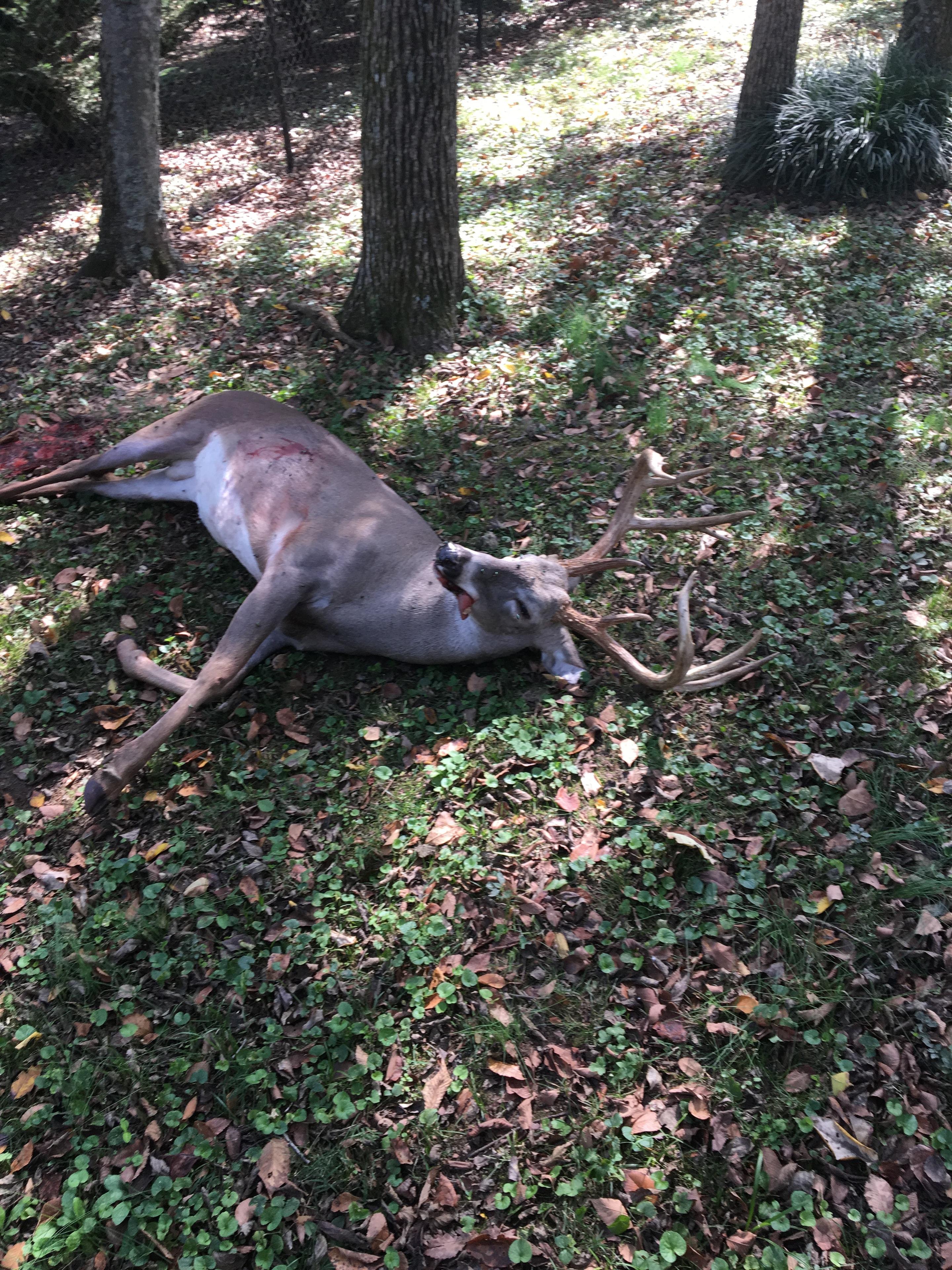
Suspected CWD deer? Call TWRA at 1-800-332-0900 before handling or moving the carcass. TWRA may need to collect samples.
What Is Chronic Wasting Disease?
Chronic Wasting Disease (CWD) is a transmissible spongiform encephalopathy (TSE) — a prion disease — that affects the nervous system of white-tailed deer, mule deer, elk, moose, and caribou. It is always fatal. There is no treatment and no vaccine. CWD is caused by misfolded proteins called prions that accumulate in brain and nervous tissue, causing progressive neurological deterioration. Infected deer become emaciated, disoriented, and lose fear of humans before dying. The disease spreads through direct deer-to-deer contact and through environmental contamination — infected deer shed prions in saliva, urine, feces, and blood, and prions persist in soil for years to decades.
Cause
Infectious prions — misfolded proteins, not a virus or bacteria
Outcome
Always fatal — no treatment, no vaccine, no recovery
Transmission
Direct contact and environmental contamination (soil, water, vegetation)
Prion persistence
Prions survive in soil for years to decades — standard disinfection does not destroy them
Human risk
No confirmed human cases — but CDC and TWRA advise against consuming CWD-positive deer
Livestock risk
CWD does not infect cattle, sheep, or other livestock
CWD in Tennessee
CWD was first confirmed in Tennessee in 2018 in Hardeman County in West Tennessee. Since then, TWRA has expanded surveillance and confirmed additional cases. Middle Tennessee counties are under active monitoring. TWRA maintains CWD Surveillance Zones and Containment Zones with specific rules about carcass transport, deer feeding, and urine-based attractants. Rules change as the disease spreads — always check current TWRA regulations before moving a deer carcass across county lines.
Surveillance Zone
Counties under active CWD monitoring. Hunters must comply with carcass transport restrictions. Whole carcasses and certain high-risk parts cannot be transported out of the zone.
Containment Zone
Counties with confirmed CWD detections. Stricter carcass transport rules apply. Deer feeding and urine-based attractants are prohibited. Check TWRA for current zone boundaries.
Active surveillance statewide
TWRA collects lymph node samples from harvested deer statewide. Property owners who find dead deer showing CWD signs are asked to report to TWRA so samples can be collected before disposal.
Signs of CWD in a Living or Recently Dead Deer
Severe emaciation
CWD deer lose body condition dramatically. A deer that appears skeletal with visible ribs and hip bones, especially outside of winter, is a CWD concern.
Stumbling or disorientation
Neurological deterioration causes loss of coordination. Affected deer may stumble, walk in circles, or appear drunk. This is one of the most visible signs of late-stage CWD.
Loss of fear of humans
Healthy deer flee from humans. A deer that approaches humans, stands unresponsive, or shows no alarm response may be neurologically compromised.
Excessive salivation or drooling
CWD affects the ability to swallow. Excessive drooling or difficulty eating is a clinical sign of advanced disease.
Head drooping, ears down
A characteristic posture of CWD deer is a lowered head with drooping ears. Combined with emaciation and disorientation, this presentation is strongly suggestive of CWD.
Found dead with no obvious cause
A deer found dead with no vehicle strike, no visible injury, and no EHD season context (outside August–October) should be considered a potential CWD mortality, especially if emaciated.
Contact TWRA Before Handling a Suspected CWD Deer
If you find a deer showing signs of CWD, or a dead deer you cannot explain, contact TWRA before moving or disposing of the carcass. TWRA may want to collect lymph node samples for CWD testing. Reporting suspected CWD cases helps TWRA track the disease and protect Tennessee's deer herd.
TWRA statewide wildlife helpline
1-800-332-0900
Report sick or dead deer, request CWD testing, ask about zone regulations
TWRA CWD information online
tn.gov/twra/wildlife/mammals/large-mammals/chronic-wasting-disease.html
Current zone maps, transport rules, and testing information
Middle Tennessee TWRA Region 2
Nashville regional office
For Middle Tennessee county-specific questions about CWD zones and regulations
Tennessee CWD Carcass Transport Rules
Tennessee law restricts the transport of deer carcasses and parts out of CWD Surveillance and Containment Zones. These rules exist to prevent prion-contaminated material from spreading the disease to new areas. Violations carry significant penalties.
Allowed Out of Zone
- Boned-out meat (no spinal column or skull)
- Quarters with no spinal column attached
- Finished taxidermy mounts
- Cleaned skull plates and antlers (no brain tissue)
- Hides with no head attached
- Finished jerky and processed meat products
Prohibited Out of Zone
- Whole carcasses
- Carcass parts with spinal column attached
- Heads (except cleaned skull plates)
- Brain or spinal cord tissue
- Urine-based deer attractants (in Containment Zones)
- Deer carcasses from out-of-state CWD zones brought into Tennessee
Why Prions Make CWD Different From Other Deer Diseases
Prions survive standard disinfection
Unlike viruses and bacteria, prions are not destroyed by bleach, alcohol, UV light, or standard heat. Contaminated soil, equipment, and surfaces can remain infectious for years. Specialized decontamination protocols are required for confirmed CWD sites.
Prions persist in soil for decades
Studies have shown CWD prions remain infectious in soil for at least 16 years. A property where a CWD-positive deer died can remain a source of environmental contamination long after the carcass is gone.
High-risk tissues concentrate prions
Brain, spinal cord, lymph nodes, spleen, and eyes contain the highest prion concentrations. Muscle meat has lower but detectable prion levels in CWD-positive deer. This is why TWRA and CDC advise against consuming deer that test positive.
No confirmed human cases — but uncertainty remains
As of 2026, no human CWD infections have been confirmed. However, the CDC and TWRA advise against consuming CWD-positive deer as a precaution. The long incubation period of prion diseases means surveillance must continue for decades before human risk can be fully assessed.
Professional Removal After TWRA Sampling
Once TWRA has collected any samples they need, the carcass still requires legal disposal under Tennessee regulations. We handle removal and disposal of CWD-suspected and confirmed deer in compliance with TWRA requirements. We do not collect CWD samples — that is TWRA's role. Our job is safe, legal removal and disposal after the regulatory process is complete. Call TWRA first, then call us.
Common Questions
Can I get CWD from a dead deer on my property?
No confirmed human CWD cases exist as of 2026. However, prions from a CWD-positive carcass can contaminate soil and persist for years. Avoid handling the carcass without gloves and PPE, and contact TWRA before moving it. Do not consume meat from a deer suspected of CWD.
Do I have to report a dead deer to TWRA?
You are not legally required to report every dead deer, but TWRA strongly encourages reporting deer showing CWD signs — emaciation, disorientation, loss of fear of humans — so they can collect samples before disposal. Call 1-800-332-0900. Single carcasses with no CWD signs do not require reporting, though TWRA appreciates outbreak reports during EHD season.
Can I move a dead deer off my property if I'm in a CWD zone?
You can move a carcass within your property for disposal, but transporting a whole carcass or high-risk parts (head, spinal column) out of a CWD Surveillance or Containment Zone is prohibited under Tennessee law. Contact TWRA for guidance on legal on-site disposal options, or call us for permitted removal and disposal.
My dog ate part of a CWD deer. Is my dog at risk?
CWD does not infect dogs. Studies have not found dogs to be susceptible to CWD prions. However, a dog that ate from a CWD carcass is exposed to the same bacterial and parasite risks as any carcass. Consult your veterinarian about deworming and any other carcass-exposure protocols.
Is CWD in Middle Tennessee yet?
As of 2026, confirmed CWD detections in Tennessee have been concentrated in West Tennessee, with surveillance expanding statewide. Middle Tennessee counties are under active monitoring. TWRA updates zone maps as new detections occur — check tn.gov/twra for current boundaries. The disease is spreading and Middle Tennessee hunters and property owners should be aware.
What should I do if I find a deer that looks sick but is still alive?
Do not approach, handle, or attempt to care for a sick deer. Keep pets and children away. Call TWRA at 1-800-332-0900 to report the animal. TWRA will advise on next steps. A deer showing CWD signs — stumbling, emaciated, unafraid of humans — cannot recover and will die. TWRA may euthanize and sample the animal.
Call TWRA First. Then Call Us.
Suspected CWD deer require TWRA notification before removal. Once sampling is complete, we handle legal removal and disposal across Middle Tennessee.